Malvertising continues to be a threat to Publishers and Ad Networks that display external content and ads on their websites. In this blog, we will look at the top threats to User Security in Q2, 2025, explore what these threats mean for Ad Networks and Publishers, as well as discover how to ensure a secure online experience for end users.
What is User Security, and how does it affect Publishers?
User Security in antivirus software refers to the features and scans that protect individual users and their personal data on devices from various digital threats. This can include malware, like unauthorized access and data breaches. It’s very important as a Publisher or Ad Network to ensure you safeguard your brand against these types of threats, as failure to do so could create a negative view of your company.
The top threats to User Security that Ad Networks face in Q2, 2025
Here are the top three threats to User Security that Ad Networks and Publishers face in Q2 of 2025. If you would like to see a full breakdown of all the violations detected by AdSecure in Q1 of 2025, check out this article!
#1 Malicious URLs - VirusTotal
Malicious URLs host unsolicited content, such as spam, phishing attempts, and drive-by exploits. They often lure unsuspecting users into becoming victims of scams, which can result in monetary loss, theft of personal information, and the installation of malware.
This Violation had an increase in detections in early 2025, with a +41.5% increase when compared to Q4 of 2024. Our team of experts speculate that this type of threat will continue to become more prevalent as Q2 continues.
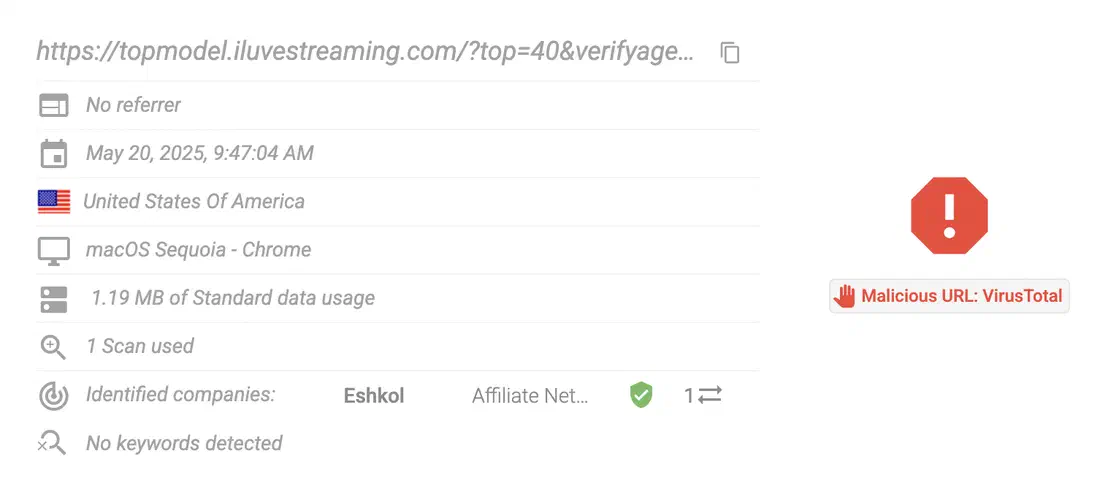
Example of a Malvertising URL detected by AdSecure’s platform
#2 SSL non-compliant
SSL (Secure Sockets Layer) occurs when there are issues with the SSL/TLS configuration, which prevents proper encryption of data transmitted between the user’s browser and the server. This means the end user’s data and any information they input is not encrypted, making it very easy for Malvertisers to steal personal data. These breaches can be caused by advertisements that include at least one unsecured element in the resource chain. For example, elements like an unsafe URL, lack of HTTPS in the connected webpage of a landing page, mixed content that may take some content from HTTP pages, issues with SSL versions, or cipher mismatches.
AdSecure has seen an increase of +11.8% in SSL detections when compared to Q4 of 2024, and continues to be a weakness that Malvertisers can use to gain access to end-user data.
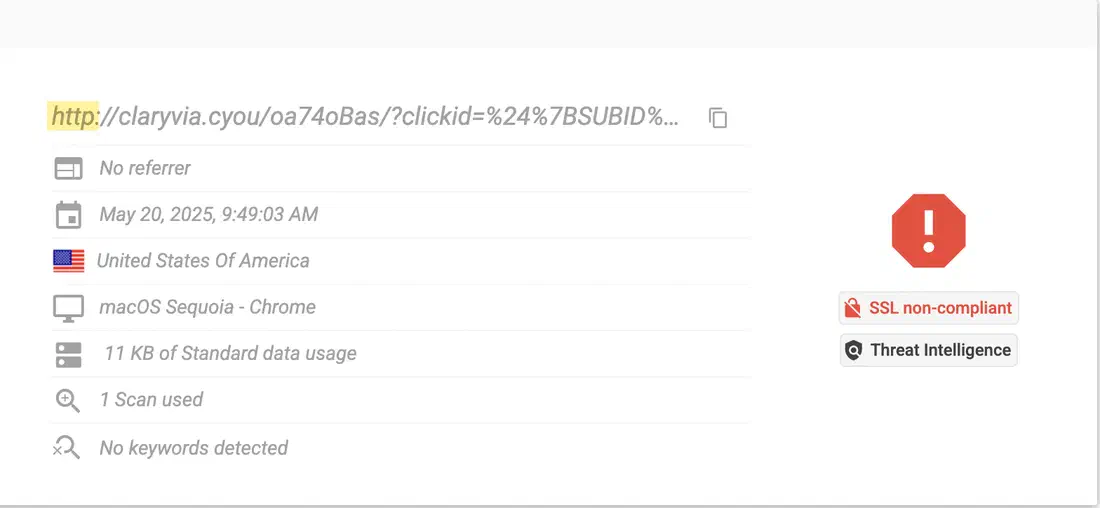
Example of an SSL violation detected by AdSecure’s platform
#3 Malicious URL: Google WebRisk
This classification is based on reported violations of malicious URLs by Google WebRisk (opens in a new tab). These are defined by Google as links that attempt to deceive unsuspecting users into becoming victims of scams, which can result in financial loss, theft of personal information, or the installation of malware. Therefore, this scan detects all URLs identified as malicious under the Google Safe Browsing guidelines (opens in a new tab) and blocks unwanted content, such as spam, phishing schemes, and drive-by exploits.
Malvertisers are becoming increasingly aware that platforms like AdSecure are successfully detecting their tactics, prompting them to explore and implement different Malvertising strategies to bypass these protections. This adaptability of Malvertisers shows the effectiveness of platforms like AdSecure, as they enhance the visibility of violations during ad campaign scans, which may have otherwise flown under the radar. AdSecure’s comprehensive detection capabilities mean that the software can detect multiple violations in one scan!
There was a decrease in Google WebRisk detections in Q1 of 2025, but our experts have noticed that detections for the Malicious URLs relating to Google WebRisk appear to be on the rise in Q2, 2025.
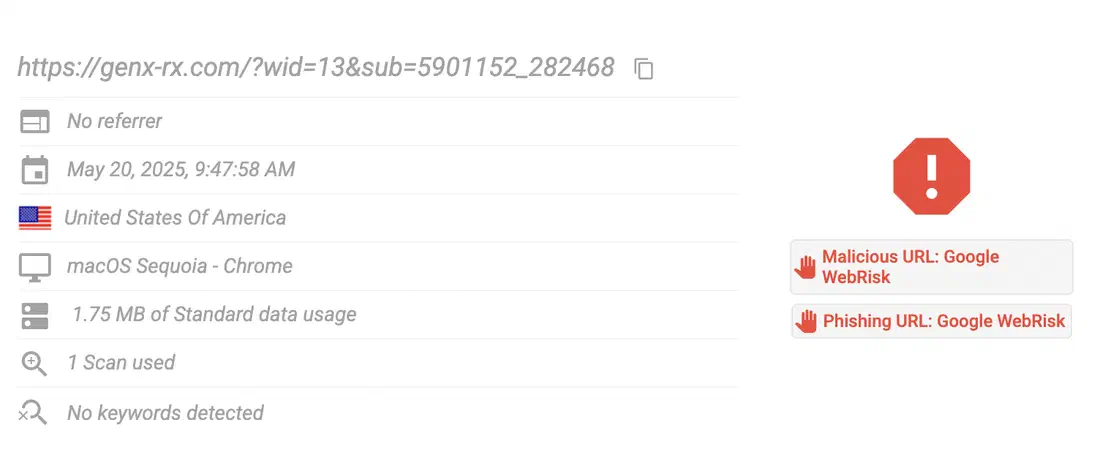
Example of a Malvertising URL: WebRisk detected by AdSecure’s platform
Emerging Malvertising trends in Q2 2025 and how to stop them
It is important that you protect your brand in 2025. You can do this by having a strong compliance team and effective ad security software to protect your ad supply chain and users from harmful ads. With Google cracking down on advertiser accounts that have security violations and an increase in Malvertising stealth, ensuring end user security is more important than ever.
If you are a Publisher or Ad Network, looking to maintain your brand reputation, serve clean and compliant ads, as well as protect user experience and online safety on your platform or website, try AdSecure. We offer 360-degree monitoring and protection for your ad supply chain by automating your ad verification process before ad campaigns go live & while they are running. Get in touch with our team or start a free 14-day trial now (opens in a new tab) to see how AdSecure can help you protect your brand.